
In feng shui, the anthurium is often valued for its vivid, heart-shaped spathes and glossy green leaves. Its bold appearance can be read as a symbol of vitality, warmth, confidence, and an open, welcoming spirit. The heartlike form may also suggest affection and connection, while the upright flowers and fresh foliage contribute an impression of energy and growth. These associations make the plant a popular choice for people who want a room to feel lively and inviting.
Red anthurium flowers are commonly linked with passion, good fortune, and the fire element. In feng shui, fire is associated with enthusiasm, visibility, and active energy, so a red plant may be chosen to create a more dynamic atmosphere. Other flower colors can carry different modern associations: pink may evoke tenderness, white can suggest calm or clarity, and green tones may call to mind renewal and balance. These interpretations are not universal rules, and meanings may vary by culture, practitioner, and personal experience.
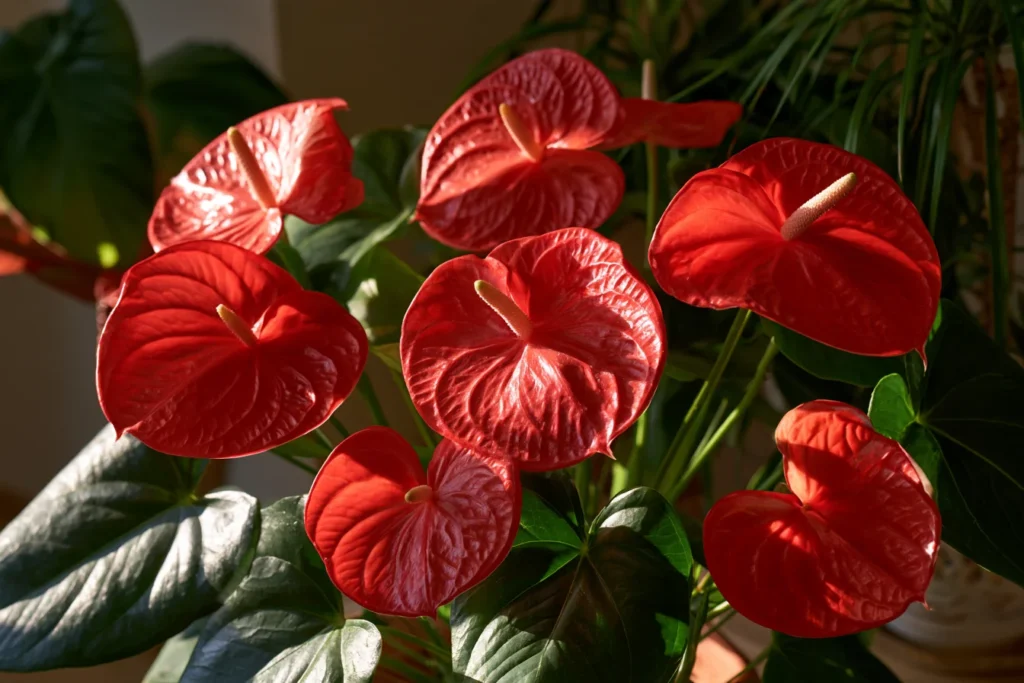
anthurium flower arrangement in Boca Raton
It is useful to distinguish traditional feng shui principles from contemporary plant symbolism. Feng shui considers how objects, space, movement, and the five elements interact; assigning a fixed meaning to every houseplant is often a more recent or personal interpretation. An anthurium’s color or shape can therefore serve as a symbolic prompt, rather than a guarantee of wealth, romance, or good luck. Its effect depends on the wider setting and on the meaning its owner gives it.
Across many approaches, a healthy, thriving plant is generally considered more supportive than one that is neglected or struggling. Healthy leaves and flowers convey care, vitality, and attention, while a wilting or damaged plant may make a space feel less inviting. In this sense, anthurium’s feng shui meaning is closely connected to its condition: thoughtful care helps its natural brightness reinforce the qualities it is intended to represent.
Choose an anthurium’s location by considering the atmosphere you want a room to support. In feng shui, plant placement is often approached as a way to reinforce an intention, while the plant’s practical needs—light, space, and airflow—remain important. A red anthurium’s vivid flowers can bring a lively focal point to a living room, entry area, or other welcoming space, where its color may encourage an energetic, sociable mood.
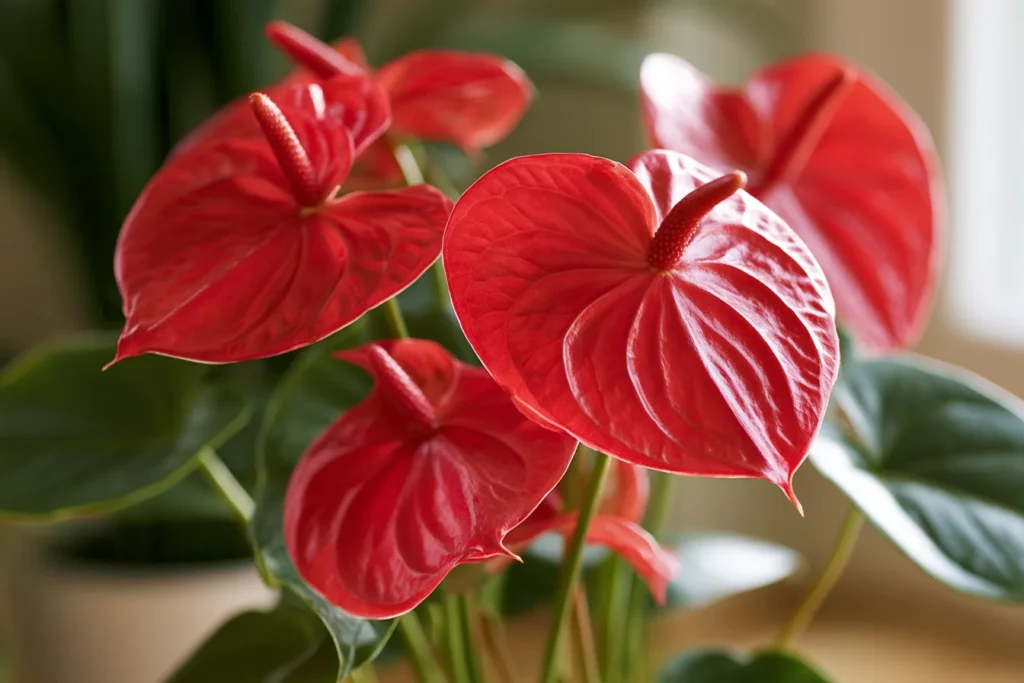
In a bedroom, anthuriums may be used thoughtfully to express warmth and connection, particularly when the space is intended to support a relationship. Keep the arrangement modest and avoid placing several bright plants where they dominate the room. A crowded display or strong concentration of color can feel visually stimulating rather than restful. Choose a position that complements the room’s purpose and leaves the overall setting calm.
Some feng shui practitioners use the Bagua map to relate parts of a home to intentions such as relationships, reputation, or prosperity. This can guide a choice of room or position, but the map’s orientation varies by school and method. Follow the approach you are using rather than assuming that the same corner represents the same intention in every home. The plant’s placement should also feel natural within the room’s layout.
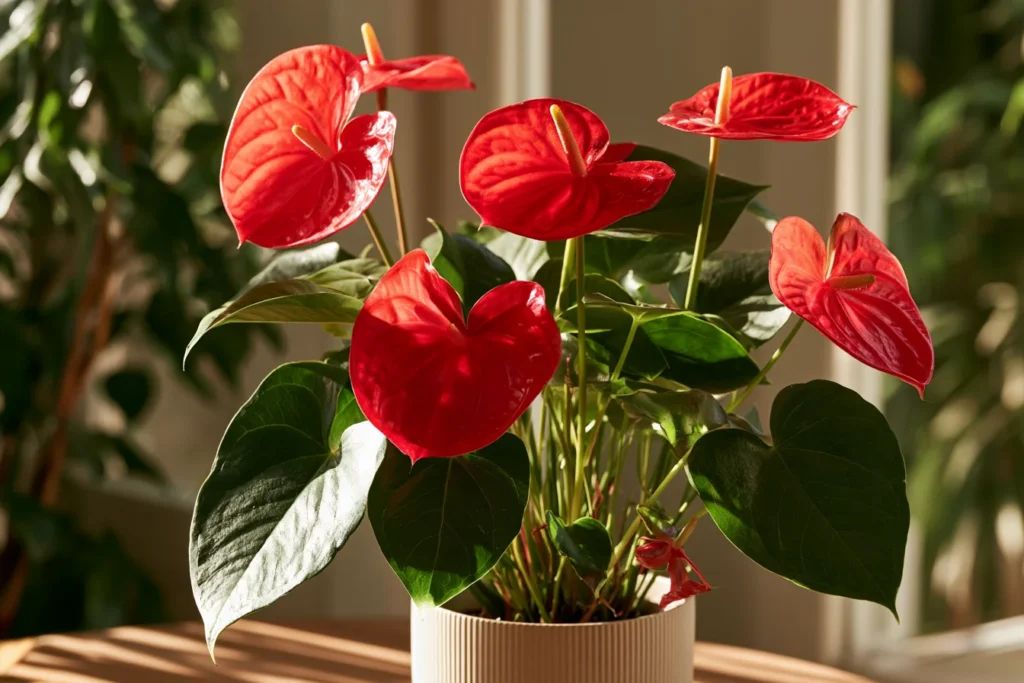
For healthy growth and a balanced appearance, place the anthurium where it receives bright, indirect light and has adequate airflow. A visible position can make the plant an intentional feature without allowing it to overwhelm nearby objects. Keep surfaces around it reasonably uncluttered, and leave enough clearance for people to move comfortably. Avoid dark corners, cramped passageways, and spots where leaves or pots obstruct doors, walkways, or everyday activities. A well-lit, accessible location supports both the plant’s care and the room’s ease of use, helping the display feel welcoming rather than forced.
Anthurium color and form can shape a room’s atmosphere through visual impact as well as symbolism. A red anthurium makes a confident focal point; its vivid blooms are often associated with fire, warmth, and visibility, so they may suit a social area or a space where you want an energetic accent. Pink varieties tend to feel softer and more affectionate, adding warmth without the same intensity. White blooms can suggest calm, simplicity, and clarity, and may blend naturally with restrained palettes. These are interpretive design associations, not universal rules: choose a shade that feels appropriate to the room and to you.
The plant’s upright, distinctive blooms draw the eye and lend a sense of vitality, while its rounded leaves bring softness and balance. Together, these contrasting shapes can make an arrangement feel lively without appearing severe. Consider how the anthurium relates to nearby furniture, artwork, and textiles. A plant with bright red or pink blooms can stand out against neutral surroundings; a white variety may complement pale, uncluttered interiors. Other shades are equally suitable when they fit your preferences and the room’s existing colors. Rather than following a fixed color code, use the plant to support the mood you want to create.
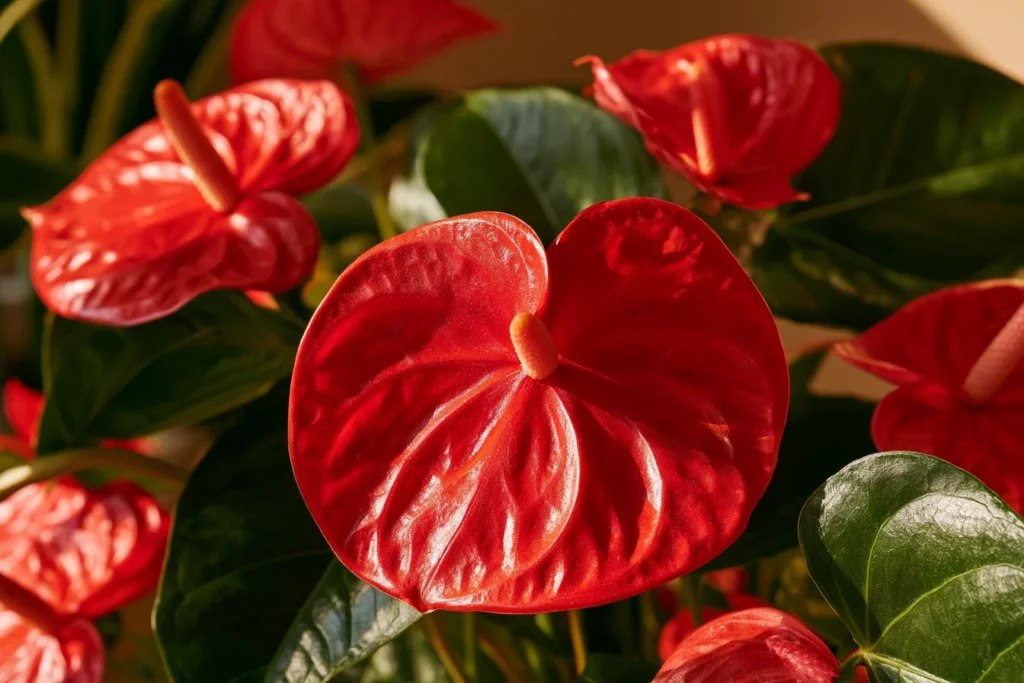
A simple ceramic pot provides a quiet foundation that lets the leaves and blooms remain the focus. Choose a finish and color that harmonize with the room, such as a neutral glaze for a bold flower or a muted complementary tone for a softer look. Natural materials—including wood, stone, woven fibers, and linen—can reinforce the plant’s organic character and help it sit comfortably within the space. Keep the overall arrangement considered: several competing bright accents may make a small area feel visually busy. These pairings are flexible suggestions, not prescriptions; a balanced display is one that feels cohesive and welcoming to its occupants.
A healthy anthurium is more likely to make a calm, orderly contribution to a room than a neglected one. Place it where it receives bright, filtered light, such as near a window protected by a sheer curtain. Direct midday sun can scorch its leaves, while very dim conditions may limit flowering. Water when the upper layer of potting mix feels dry, then allow excess water to drain away. Avoid leaving the pot standing in water, since persistently wet roots can become damaged. A container with drainage holes and an airy mix—often one formulated for aroids or containing materials such as bark and perlite—helps maintain the balance of moisture and airflow the plant needs.
Anthuriums generally prefer moderate warmth and humidity. Keep the plant away from cold drafts, heating vents, and sudden temperature changes. If indoor air is especially dry, a humidifier or a grouping of plants can help create a more suitable environment; the soil should still drain freely. Remove fading leaves and spent blooms with clean scissors to keep the plant tidy and direct attention to healthy growth. Check the undersides of leaves and stems regularly for common pests, including mealybugs and spider mites. Early treatment is usually simpler than addressing an established infestation, and routine observation also helps you notice changes in light, watering, or overall condition.
Safety is an essential part of thoughtful plant care. Anthuriums contain compounds that can irritate the mouth and digestive tract if chewed, so keep the plant out of reach of children and pets. Wear gloves if you have sensitive skin, avoid touching your eyes while pruning, and wash your hands after handling the plant or its sap. When deciding where to place an anthurium, choose a spot that feels welcoming, suits its growing needs, and does not create a household hazard. Care for it consistently, adjusting routine to its condition rather than following a rigid schedule. In feng shui, the plant’s symbolism can support an intention for warmth or vitality, but it is best treated as a mindful practice—not as a substitute for practical decisions or attentive care.